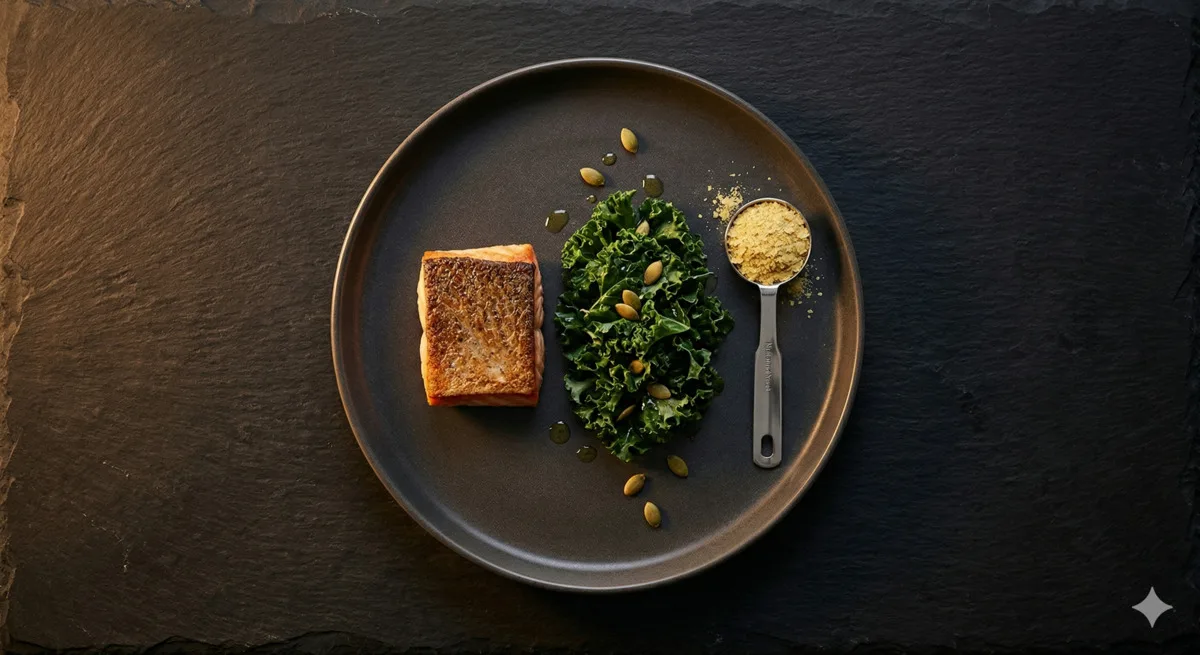
The Cast in Iron CRON protocol runs at roughly $6.50 per day. Chuck roast, sardines, chicken liver, nutritional yeast. The optimization target is micronutrient density per calorie, and those ingredients hit it.
The framework does not require that price point. The same 13-nutrient target — iron, zinc, B12, selenium, magnesium, calcium, potassium, vitamin D, vitamin A, vitamin C, folate, omega-3, protein — can be built from ingredients that cost considerably more. The math stays identical. The ingredient set does not.
This is what that version looks like.
The Optimization Target Does Not Change
Before listing ingredients, one clarification worth making explicit: the CRON principle is micronutrient density per calorie, not cost per nutrient. A food earns a place in the protocol by delivering measurable micronutrients per calorie. Premium sourcing does not override that constraint — it operates within it.
A5 wagyu that covers your zinc and B12 targets in 4 oz is a better CRON food than commodity ribeye that requires 8 oz for the same yield, if the calorie math works out. Sometimes it does. Sometimes premium cuts are calorie-dense enough to challenge the constraint. Those cases are addressed below.
The Walford ingredient legend covers the budget tier. This article covers the same framework applied to its upper end.
Oysters
Oysters are the single highest-density zinc source per calorie in the food supply, at any price.
USDA FoodData Central data for raw Eastern oysters: 39mg zinc per 100g. One medium Eastern oyster weighs approximately 14g raw meat, which yields roughly 5.5mg zinc. The RDA for men is 11mg. Two oysters covers the daily zinc requirement. The caloric cost is approximately 20 calories.
That ratio — 5.5mg zinc per 10 calories — has no equivalent in the food supply. Nothing else comes close. Chuck roast delivers 4.7mg zinc per 100g at 250 calories. Pumpkin seeds deliver 7.6mg per 100g at 560 calories. Oysters deliver the same zinc load at a fraction of the caloric cost.
The same 100g of Eastern oysters also provides: 5mg iron (28% DV), 16µg B12 (667% DV), 20µg selenium (36% DV), and meaningful copper. Published shellfish nutrient analysis consistently ranks oysters highest on composite micronutrient density indices — specifically for zinc, B12, and iron combined.
The fact that the most expensive ingredient in a standard CRON meal also solves the hardest micronutrient problem most efficiently is not a coincidence. Zinc is the nutrient men in a caloric deficit most commonly under-deliver. Oysters, gram for gram, are the most efficient correction available. The market priced them accordingly.
Pacific oysters run larger — one Pacific oyster can contain 18mg zinc — which means a single oyster covers the full daily requirement. For CRON purposes, the relevant number is zinc per calorie, not zinc per dollar.
Two to four raw oysters as an evening component will cover zinc for the day and contribute meaningfully to iron and B12 without adding significant calories. Buy them fresh. Eat them raw. No preparation required.
A5 Wagyu
A5 wagyu delivers heme iron, zinc, creatine, and B12 in the same package as any beef cut, with one complication: the intramuscular fat content is high enough to affect the calorie math.
Standard chuck roast runs approximately 2.5g fat per 100g after braising, with 25g protein. A5 wagyu runs 20-30g fat per 100g depending on grade and cut, with comparable protein. That fat concentration shifts the calorie-to-nutrient ratio in the wrong direction for strict CRON purposes — you pay more calories per gram of zinc and iron than you do with leaner beef.
The CRON adjustment: smaller portions, higher selectivity. A 2oz serving of A5 wagyu seared and rested delivers approximately 10g protein, 0.9mg iron, and 1.8mg zinc at around 120 calories. That is a better per-calorie micronutrient yield than standard ribeye at the same portion size, but you cannot eat it in the same volume as lean beef and stay within a caloric target.
In a premium batch week, A5 wagyu works best as a 2-3oz component within a meal that carries its larger micronutrient load from other sources — oysters, sardines, vegetables. It is not a primary protein anchor at volume. It is a precise addition where the fat profile and micronutrient concentration justify the caloric cost.
King Salmon
Wild King salmon (Chinook) has the highest fat content of the Pacific salmon species, which translates to the highest omega-3 yield. USDA data for wild Chinook: approximately 1,900-2,300mg EPA+DHA per 100g serving, depending on season and source.
The comparison with farmed Atlantic salmon is more nuanced than the “wild is better” framing suggests. Farmed Atlantic salmon is fattier — total fat can run 13-20g per 100g versus 6-10g for wild King — and that fat includes omega-3s. USDA nutrient variability data shows farmed Atlantic averaging 2,100mg EPA+DHA per 100g in some analyses, comparable to or higher than wild King by raw omega-3 volume.
The CRON distinction is omega-3 to omega-6 ratio, not total omega-3 volume. Wild King salmon has a more favorable ratio because it eats marine prey rather than grain-based feed. Published analysis of farmed Atlantic salmon shows the omega-6 content increasing over decades as feed composition has shifted toward plant oils. Wild King salmon’s ratio has not changed.
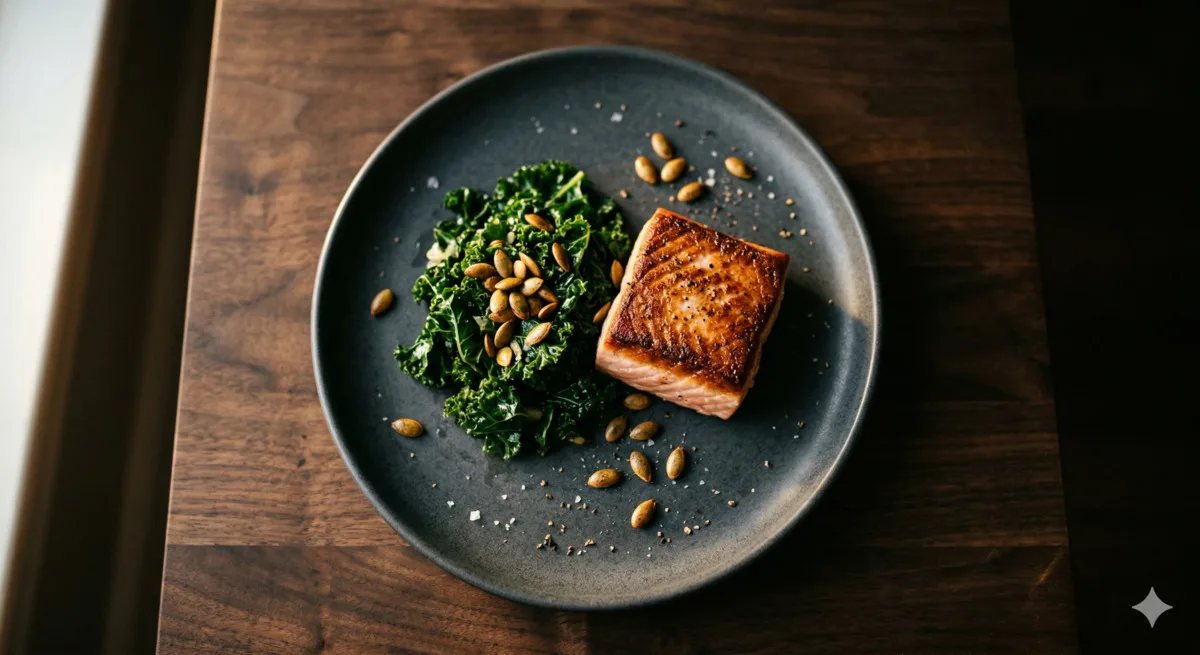
Beyond omega-3s, wild King delivers vitamin D (approximately 11-14µg per 100g, close to the 15µg RDA), B12, selenium, and complete protein at 20-25g per 100g. For a CRON weekday lunch — 6oz portion, assembled cold with a miso-based dressing — it covers vitamin D, hits meaningful omega-3 volume, and contributes to the day’s B12 and selenium targets without any cooking time beyond the Sunday batch.
Premium Tinned Fish
The Walford protocol treats sardines as a primary protein anchor because they are the most micronutrient-dense food per calorie in the budget category. That analysis applies equally to premium tinned fish. The nutrients do not change with the brand.
Ortiz, Matiz, and José Gourmet deliver the same zinc, iron, omega-3, B12, and selenium as any sardine. The difference is texture, oil quality, and the specific fish variety. Ortiz uses Cantabrian anchovies in olive oil. José Gourmet uses Atlantic mackerel and Galician mussels, both high in omega-3. The micronutrient case for premium tinned fish is identical to the budget case. The upgrade is in the eating experience, which matters for adherence across weeks and months.
One practical note: premium tinned fish at $6-12 per tin still costs less per gram of protein and omega-3 than King salmon or wagyu. For a protocol that runs multiple months, the tinned fish category represents the most cost-efficient premium upgrade available.
Foie Gras
Foie gras is nutritionally unusual. Per 100g: approximately 5.5-18mg iron (sources vary; this reflects the range in published USDA-referenced data), 54µg B12 (over 20 times the RDA), substantial vitamin A (over 8,500 IU per 100g), and meaningful zinc. A 2oz serving covers a significant portion of daily iron and exceeds the daily B12 requirement.
The ethical question around foie gras production — force-feeding ducks or geese to enlarge the liver — is documented. It is not addressed further here. The data is what it is; the decision is individual.
The CRON constraint to watch: foie gras runs approximately 462 calories per 100g, nearly all from fat. A 2oz serving at 130 calories is a concentrated micronutrient delivery within a manageable caloric footprint. At larger portions, the caloric cost competes with the micronutrient benefit. Use it as a 1-2oz component — the same logic as A5 wagyu — not as a primary protein source.
Sea Urchin (Uni)
Uni is genuinely high in micronutrients relative to its calorie count. Per 100g: approximately 1.8mg iron, 1.3mg zinc, meaningful omega-3 (EPA in particular), and iodine content that varies significantly by habitat and diet. Sea urchin fed on kelp — which is the natural condition for Pacific urchin — trends higher in iodine than urchin raised in lower-iodine environments.
The calorie density is low: approximately 100-120 calories per 100g, mostly protein and fat. That makes uni a reasonable CRON addition where the micronutrient-per-calorie ratio justifies the cost. The practical constraint is availability and seasonality. Fresh uni is at its best September through April in the Pacific. Outside that window, quality drops and the premium is harder to justify.
In a CRON context, uni functions similarly to oysters — a small portion, eaten raw or minimally prepared, that contributes iodine, iron, and omega-3 without significant caloric load.
Functional Ingredient Upgrades
24-Month Parmigiano-Reggiano
The Walford ingredient legend already includes Parmigiano-Reggiano as a CRON ingredient for calcium, spermidine, and protein density. The premium version is age: 24-month aging concentrates protein and minerals as moisture reduces. Standard analysis shows approximately 1,160mg calcium per 100g in aged Parmigiano-Reggiano, compared to roughly 720mg in standard Parmesan. At 2 tablespoons per meal — the standard usage in this protocol — 24-month aged Reggiano delivers more calcium per gram and has more developed umami, which reduces the need for additional sodium in a dish.
Aged Miso
White miso runs 2-4 weeks of fermentation. Red miso runs 6-12 months. Dark barley miso runs 24-36 months. The longer fermentation produces higher probiotic complexity and more developed glutamate content — both relevant for CRON purposes, since gut microbiome diversity tracks with long-term micronutrient absorption efficiency. The difference in cost between white miso and 24-month aged barley miso is $4-8 per container. It costs less per meal than the difference between standard and premium beef.
Hand-Harvested Nori
The iodine content of commercially dried nori ranges from 16µg to over 2,900µg per sheet, depending on harvest location, species, and processing. Hand-harvested artisanal nori from specific Japanese coastal regions tends toward higher iodine concentration. This is both a feature and a caution: iodine toxicity begins at sustained intake above 1,100µg per day for adults, per NIH guidance. One sheet of high-iodine nori can approach that ceiling. If you are using premium nori alongside kombu broth and dulse flakes — standard CRON protocol — track your iodine total. The budget and premium versions of this ingredient have the same upside and the same risk.
What a Luxury Batch Sunday Looks Like
The structure matches the standard batch cooking system. What changes is the protein selection.
Sunday cook:
- Dry-aged beef braise (3-4 lbs, 5-6 hours, same kombu-miso braising liquid as chuck roast protocol) — primary protein for 3 weekday dinners
- King salmon portion (6 portions, 6oz each, cold-poached or sheet-pan roasted) — weekday lunches
- Egg muffins with nutritional yeast and vegetables — breakfast anchor
- Fresh oysters (1 dozen) — Sunday evening, eaten raw, zinc requirement covered for the day
The premium tier does not add preparation time. Dry-aged beef braises identically to chuck roast. King salmon batch-cooks in 20 minutes. Oysters require no cooking.
Weekday dinners pull from the braise. Lunches are cold-assembled from the salmon batch. A tin of Ortiz anchovy or José Gourmet mackerel fills any protein gap mid-week without additional cooking.
What Premium Sourcing Does Not Change
The tracking requirement is the same. A week where you sourced A5 wagyu, wild King salmon, and fresh oysters but did not actually hit your zinc, iron, and vitamin D targets is a failed CRON week. Premium ingredients raise the ceiling on micronutrient density — they compress the volume required to hit targets, reduce preparation time, and improve flavor in ways that matter for long-term adherence. They do not do the math for you.
The Walford framework is an engineering constraint. Chuck roast and nutritional yeast solve it at $6.50 per day. Oysters and King salmon solve it at a higher price point. The constraint does not change. The inputs do.
New and seasonal recipes, and what's working. Once a month. No ads, no fluff.