The cooled potatoes article covered the core mechanism: cooking starch gelatinizes it, cooling reorganizes amylose chains into RS3 crystalline structures that resist digestion and reach the colon intact. Potatoes yield the highest RS3 per gram of cooked weight. But they are not the only source. Beans, rice, and pasta all undergo the same retrogradation process, and several Cast in Iron recipes already exploit it.
RS3 Yield by Food Type
Not all starches retrograde equally. Amylose content is the primary driver — higher amylose means more RS3 after cooling. Here is how the major food categories compare.
Potatoes remain the top performer. Yukon Golds cooked and cooled for 24 hours at refrigerator temperature produce the highest RS3 concentration per serving. The pillar article covers this in detail.
Beans and legumes are the second most efficient RS3 source. A 2024 review on RS3 enhancement in starchy foods confirmed that legumes produce significant RS3 during retrogradation due to their high amylose content. Multiple heating and cooling cycles further increase RS3 formation in legumes — a finding established in earlier research on cereals, legumes, and tubers. Black-eyed peas and white beans (cannellini, navy) are particularly effective. Both are already staples in the Cast in Iron rotation.
A 2022 review on the prebiotic potential of dietary beans and pulses found that their resistant starch content supports aging-associated gut and metabolic health, with effects mediated through short-chain fatty acid production — primarily butyrate and propionate.
Rice produces measurable RS3 when cooled. A study on cooked white rice found that RS content increased from 0.64g/100g in freshly cooked rice to 1.65g/100g after 24 hours at 4C and reheating. That is a 2.5x increase from a step that requires zero additional effort if you batch cook. A 2023 study demonstrated that retrograded rice starch reduced triglycerides by 17.69% and LDL cholesterol by 41.33% in high-fat diet models, suggesting benefits beyond gut health alone.
Pasta also forms RS3 through retrogradation. A pilot study on chilled and reheated pasta found that the cooling-reheating cycle reduced postprandial glycemic response compared to freshly cooked pasta. Chickpea pasta showed particularly strong results, with RS content doubling from 1.83g/100g to 3.65g/100g after cooling. Pasta is not a core Cast in Iron ingredient, but this is worth noting for those who include it in their rotation.
Cooling Protocol
The retrogradation process is time-dependent. Twelve hours at refrigerator temperature (4C) produces a meaningful RS3 yield. Twenty-four hours is better. The 2024 RS3 review confirmed that both storage time and temperature govern the degree of retrogradation — longer cooling at lower temperatures increases RS3 formation.
The critical fact, covered in the pillar article but worth repeating: reheating does not destroy RS3. Research on the thermal behavior of RS3 confirmed that once the crystalline structures form, they are thermally stable. You can reheat beans in a skillet, microwave rice, or warm pasta in a pan. The RS3 survives. Some evidence suggests repeated cool-reheat cycles may increase RS3 content further.
Batch Cooking Creates RS3 Automatically
If you follow the batch cooking system, you are already generating RS3 across multiple food categories without extra effort. The workflow is: cook on Sunday, refrigerate, eat Monday through Friday. Every serving has had 12-24 hours of cooling. The protocol was designed for time efficiency. The RS3 formation is a structural bonus.
This is particularly relevant for beans. The cowboy caviar recipes are no-cook preparations using canned beans that sit in the fridge after assembly. The rice in the ground beef skillet goes into containers and refrigerates overnight. In both cases, the batch cooking timeline naturally provides the cooling window that maximizes RS3.
Recipes Already Generating RS3
These Cast in Iron recipes produce RS3 through their standard preparation and storage:
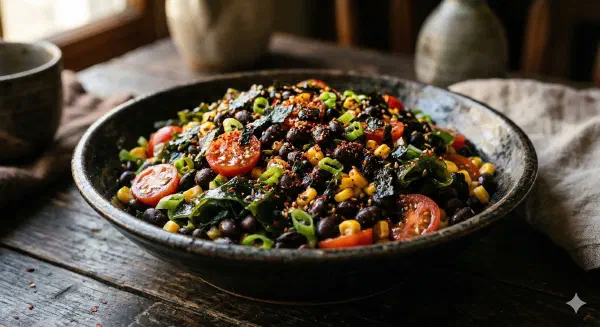
- Wakame Cowboy Caviar — Black beans, assembled cold, stored in the fridge. Eaten cold for maximum RS3 retention.
- Wakame Cowboy Caviar with Black-Eyed Peas — Black-eyed peas alongside black beans. Double the legume variety, double the RS3 substrate.
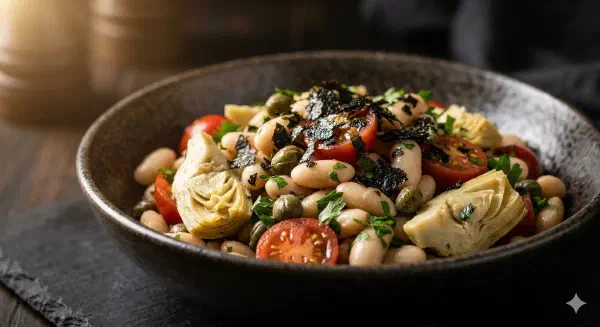
- Mediterranean White Bean Caviar — Cannellini beans, no-cook assembly, refrigerated storage. White beans are high in amylose.
- Kimchi-Style Cowboy Caviar — Black bean base with gochugaru. Same cold-storage RS3 mechanism.
- Turmeric Sweet Potato Cubes — Air-fried, cooled overnight. The turmeric adds anti-inflammatory compounds on top of the RS3.
- One-Skillet Ground Beef and Rice — Cooked rice portioned into containers and refrigerated. The cooling converts a portion of the rice starch to RS3.
Daily RS3 Targets
Research suggests meaningful gut health benefits begin at approximately 15g of resistant starch per day. The average American consumes 3-8g. A 2024 study in Nature Metabolism found that resistant starch intake at approximately 40g/day facilitated weight loss and reshaped gut microbiota composition in overweight participants. A 2024 meta-analysis confirmed that resistant starch increases Bifidobacterium and Ruminococcus populations while boosting total short-chain fatty acid production. An earlier review established that resistant starch acts as a selective prebiotic — feeding beneficial species preferentially over pathogenic ones.
You do not need to hit 40g/day. The 15-30g range is a practical target. A serving of cooled beans provides 3-5g of RS3. A serving of cooled rice adds 1-2g. A serving of cooled potatoes contributes 3-4g. Across a full day of batch-cooked meals, reaching 15g is achievable without any ingredient changes — only the cooking and cooling timeline matters.
Read more:
- Resistant Starch: Your Cooled Potatoes Are Doing More Than You Think — the RS3 pillar article
- The Batch Cooking System — the weekly protocol that creates RS3 by default
New and seasonal recipes, and what's working. Once a month. No ads, no fluff.