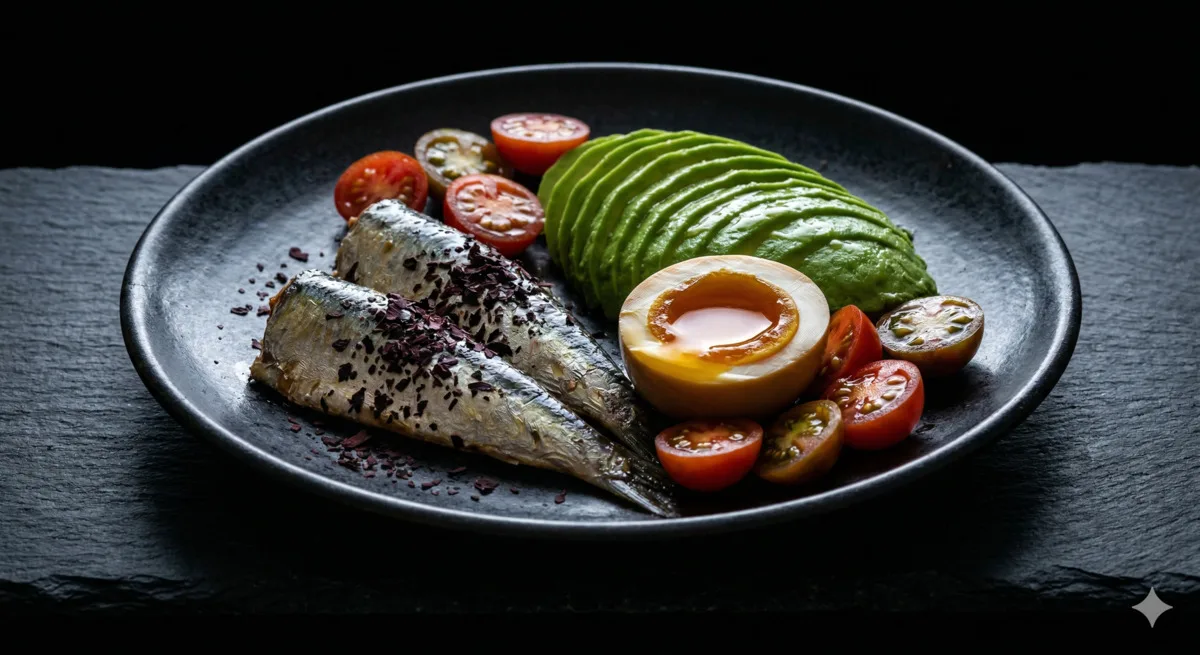
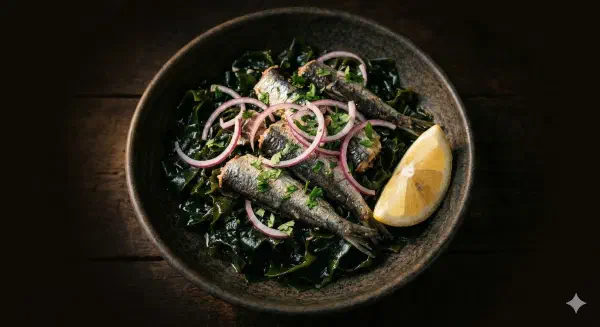
Dulse (Palmaria palmata) is a red seaweed harvested primarily from the cold waters of the North Atlantic — the coasts of Iceland, Ireland, Maine, and the Canadian Maritimes. It has been a food source in these regions for over a thousand years. Dried and sold as flakes, it functions as a mineral-dense salt replacement that dissolves on contact with warm food.
On this site, dulse appears in more recipes than any other Walford ingredient. It shows up in 35 dishes — on eggs, roasted vegetables, sardine toasts, sauces, and braised proteins. The reason is simple: no other single ingredient delivers this range of micronutrients per calorie.
Nutrition per Serving
A standard serving of dulse flakes is about 5 grams (roughly 1 tablespoon). That delivers approximately:
- Iron: 1.8 mg (10% DV) — non-heme, but meaningful when stacked across multiple meals
- Iodine: 110-150 mcg (73-100% DV) — the highest concentration among common sea vegetables
- Potassium: 340 mg (7% DV) — comparable to a small banana
- Vitamin B12: 1.3 mcg (54% DV) — one of the few plant-source B12 options with meaningful bioavailability
- Calcium: 15 mg (1% DV)
- Calories: 10
Those numbers shift by brand and harvest location, but the ratios hold. The iodine content alone makes dulse relevant for anyone avoiding iodized salt — which includes most people cooking with sea salt or kosher salt.
Why Dulse Matters for CRON
The Walford-CRON framework prioritizes micronutrient density per calorie. Dulse is the best example of this principle in practice. Ten calories delivers meaningful amounts of four different micronutrients that are commonly under-consumed in whole food diets: iodine, iron, potassium, and B12.
Research consistently shows that iodine deficiency is more prevalent than most people assume, particularly in diets that avoid processed food (where iodized salt is the primary source). Dulse solves this without adding sodium chloride.
The B12 content is noteworthy. Most plant-based B12 sources contain analogues that the body cannot use. Dulse contains methylcobalamin — the bioactive form. This makes it one of the few sea vegetables with confirmed B12 activity, relevant for anyone reducing meat intake or following a calorie-restricted protocol.
For more on how these micronutrients fit the protocol, see the Walford Ingredient Legend.
How to Use Dulse
Dulse flakes require zero preparation. Open the bag and shake them onto food.
- Eggs: A pinch on scrambled egg whites or over shakshuka. This is the most common application on this site.
- Roasted vegetables: Sprinkle after roasting. The residual heat activates the smoky, briny flavor.
- Sauces and cremas: Blend into dips, romesco, or yogurt-based sauces. Dulse dissolves completely.
- Sardine toasts and fish: A natural pairing. The sea-mineral flavor complements oily fish.
- Soups and broths: Add directly to braising liquids or dashi for an iodine and umami boost.
Store in a cool, dry place. Dulse keeps for 12 months or more once opened if you seal the bag.
Where to Buy
Maine Coast Sea Vegetables Organic Dulse Flakes is the brand used in every recipe on this site. Organic, harvested from the Gulf of Maine, and consistently high quality. A single bag lasts 2-3 months of daily use. Also available at most health food stores and co-ops.
Recipes with Dulse
- Cast Iron Beef Shakshuka
- Air Fryer Tilapia with Dulse and Lemon
- Sardine Toast with Dulse, Lemon, and Capers
- Egg White Wrap with Turkey and Dulse
- Nooch-Dulse Egg White Muffins
- Edamame with Dulse and Chili Flakes
- Cast Iron Wild Salmon
- Garlic Lemon Shrimp with Zucchini
- Cilantro Dulse Crema
- Roasted Red Pepper Dulse Romesco
See the full CRON Pantry for all Walford ingredients.
New and seasonal recipes, and what's working. Once a month. No ads, no fluff.