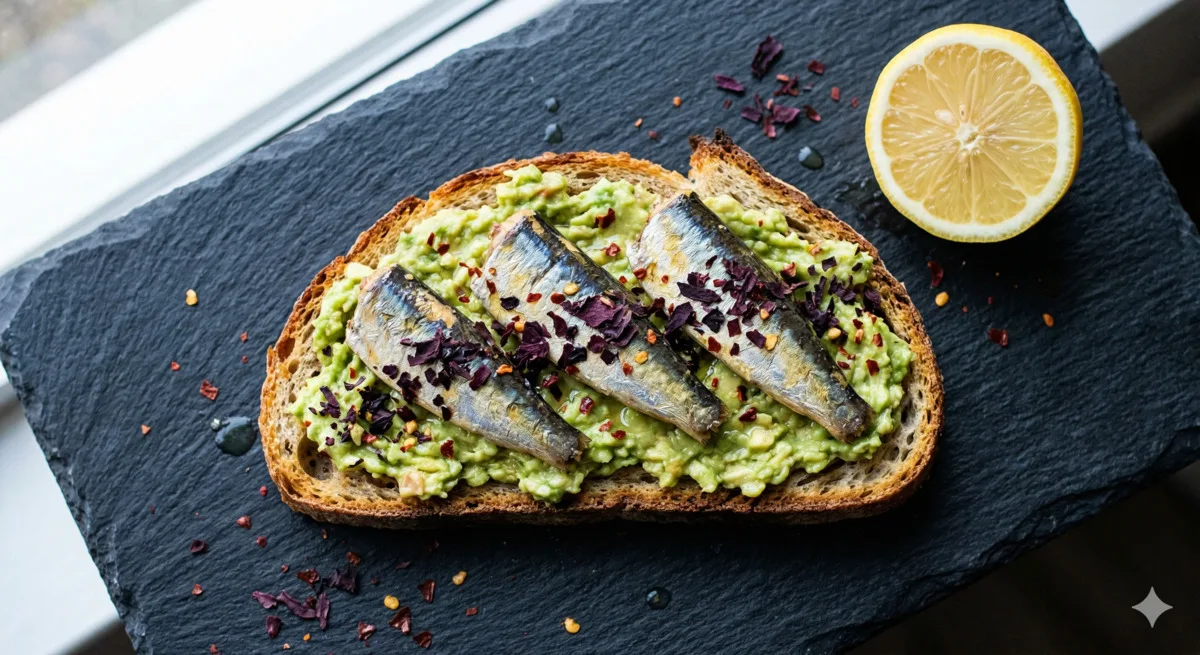
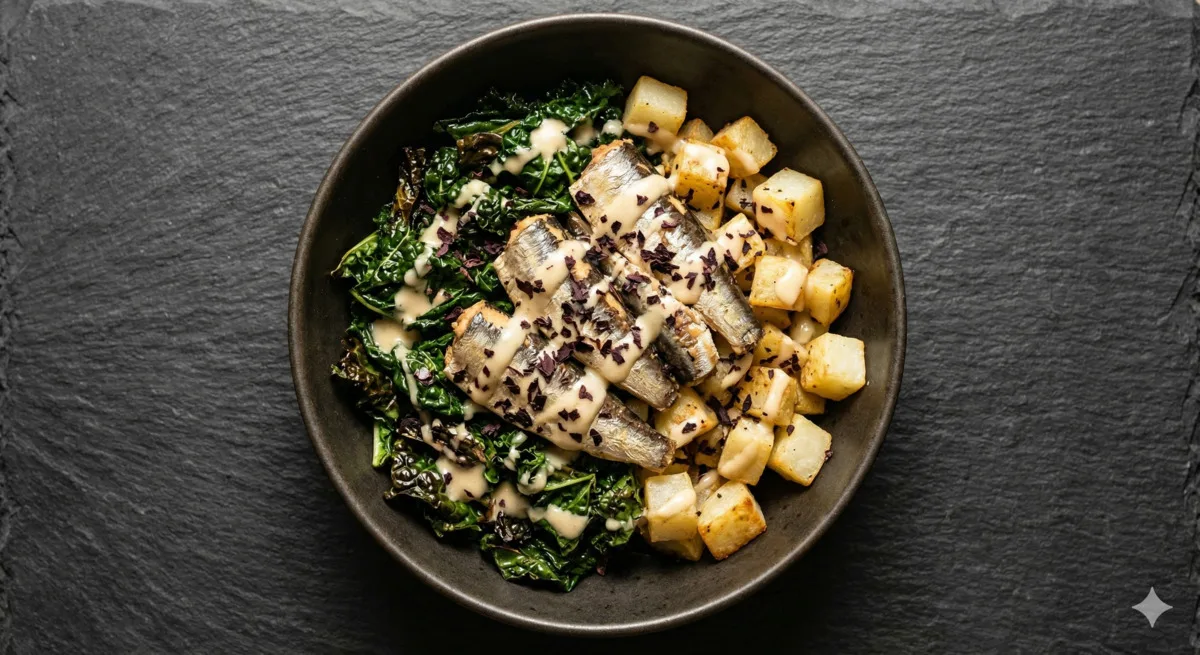
Calcium never gets the protocol treatment. It is treated as an afterthought — drink your milk, take your supplement, move on. The result is that most men over 40 are chronically low on calcium intake without knowing it, and the ones who notice tend to reach for dairy or a carbonate supplement rather than a food that earns its plate space across four or five nutritional vectors simultaneously.
The RDA and Where Most Men Fall Short
The recommended daily allowance for calcium is 1000 mg/day for men ages 19–70, rising to 1200 mg/day after 71. Population data consistently shows that adult men average around 800–900 mg/day — below the RDA, and well below the functional range used in longevity research.
The consequences are not just skeletal. Calcium is involved in every muscle contraction in your body, including cardiac muscle. It is required for nerve signal transmission. It regulates intracellular signaling cascades that affect gene expression, cell division, and apoptosis. The “calcium is for bones” framing is a simplification that has led generations of men to treat it as irrelevant after age 30. It is not.
For men on a calorie-restricted protocol, the problem is compounded. When you reduce total caloric intake, you either eat more nutrient-dense food or you accept micronutrient shortfalls. Dairy is calorically dense relative to its calcium delivery when you account for the full nutritional package. Sardines are not.
Sardines with Bones: The Delivery Mechanism
A 3.75 oz can of sardines packed in olive oil, with bones, contains approximately 351 mg calcium by USDA measurement. That number comes almost entirely from the bones, which are softened through pressure cooking during the canning process until they are fully edible — no preparation required.
The calcium in fish bones is present as hydroxyapatite: a crystalline calcium phosphate matrix that is structurally identical to the mineral component of human bone. Research on calcium absorption from whole small fish demonstrates bioavailability comparable to dairy calcium under controlled conditions. This is not a surprising finding — the chemistry of the mineral is the same.
What matters practically: 351 mg of absorbable calcium delivered in 190 calories. One cup of whole milk delivers approximately 300 mg calcium in 150 calories. The per-calorie efficiency is similar. The nutrient co-delivery is not.
The sardine recipes on this site consistently measure 380–445 mg calcium per serving, because they combine the fish (with bones) with low-oxalate vegetables and complementary ingredients. See the section below for the full list.
Why Sardines Keep You Full
The satiety effect of sardines is not a vague nutritional claim. It has two independent mechanisms with established research support.
Protein. A 3.75 oz can of sardines delivers 23 g protein. High-protein intake consistently suppresses appetite through two pathways: it reduces ghrelin (the primary hunger hormone) more effectively than equivalent calories from fat or carbohydrate, and it increases peptide YY, which signals satiety to the hypothalamus. In the context of a calorie-restricted protocol, the quality of your protein source — specifically its per-calorie density — determines how hungry you are at deficit. Sardines rank among the highest protein-to-calorie ratios of any whole food at roughly 0.12 g protein per calorie.
EPA and DHA. Sardines are one of the richest whole-food sources of omega-3 fatty acids, delivering 1.5–2.5 g EPA+DHA per can depending on the variety. Omega-3 fatty acids modulate satiety hormones independently of their caloric contribution, and the effect is measurable in controlled trials. The combination of high-protein and long-chain omega-3 in a single low-calorie food makes sardines unusual. There are not many foods in that category.
At 190 calories, a can of sardines will keep most people satisfied for 3–4 hours. Most 190-calorie foods will not.
Calcium’s Role Beyond Bones
Most calcium discussion focuses on bone mineral density, which matters but is not the whole story for men over 40.
Muscle function. Calcium is the molecular trigger for muscle contraction. When a motor neuron fires, calcium floods into the muscle fiber and initiates the actin-myosin cross-bridge cycle that produces force. This applies to every skeletal muscle rep and to cardiac muscle contraction on every heartbeat. Adequate calcium is not optional for training performance.
Nerve signaling. Calcium ions carry nerve signals across synapses. The mechanism is direct: neurotransmitter vesicles fuse with the presynaptic membrane in response to calcium influx. Low ionized calcium affects neuromuscular function before it shows up on a DEXA scan.
Intracellular signaling. Calcium acts as a second messenger in signaling cascades that regulate cell division, gene expression, and apoptosis. The research connecting adequate calcium intake to reduced colorectal cancer risk is one of the better-characterized diet-cancer relationships in the literature. The mechanism runs through intracellular calcium’s role in colonocyte proliferation and differentiation.
What Blocks Calcium Absorption
Several common dietary factors reduce calcium absorption enough to matter on a protocol where you are hitting the RDA exactly rather than exceeding it with a large buffer.
Phytates. Found in whole grains, legumes, and seeds. They form insoluble complexes with calcium in the gut. Soaking and cooking legumes reduces phytate content substantially. The CRON protocol’s emphasis on cooked whole foods rather than raw grains minimizes this problem.
Excess sodium. High sodium intake increases urinary calcium excretion. Every 2300 mg sodium consumed increases calcium excretion by approximately 40 mg. If you are eating high-sodium processed foods while trying to hit 1000 mg calcium from sardines and vegetables, some of that calcium is going out in the urine. This is one of the less-discussed reasons that sodium control matters beyond blood pressure.
Iron timing. As noted in the Iron Guide, calcium competes with iron at the intestinal transporter level. If you are supplementing iron or deliberately eating high-iron and high-calcium foods together, there is a real inhibitory interaction. Within the context of whole-food meals, this effect is less pronounced than with supplements, but it is worth being aware of.
Vitamin D. Calcium absorption in the small intestine is actively regulated by 1,25-dihydroxyvitamin D (calcitriol). Without adequate vitamin D, the transport proteins that move calcium across the intestinal wall are not upregulated and passive absorption is the fallback. If your vitamin D is low, your effective calcium absorption drops materially even if dietary intake is on target. Test and correct vitamin D before worrying about optimizing calcium sources.
High-Calcium Recipes on This Site
These are the sardine-based recipes ordered by calcium per serving:
- Sardines Wakame Seaweed Salad — 445 mg calcium
- Sardine Kale Bowl — 430 mg calcium
- Sardine Avocado Breakfast Plate — 420 mg calcium
- Sardine Toast with Dulse and Lemon — 400 mg calcium
- Sardine Avocado Toast — 380 mg calcium
Every one of these uses bone-in canned sardines. If you substitute boneless sardines, the calcium content drops to roughly 60–80 mg per serving — a different food entirely.
One-page PDF. Print it, stick it on the fridge, fill it in each week.
New and seasonal recipes, and what's working. Once a month. No ads, no fluff.