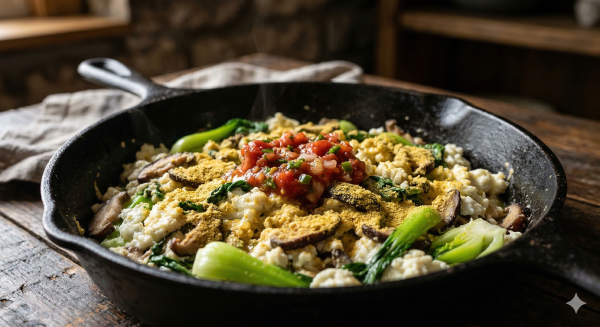
The vegetarian shakshuka with feta and kale is good. This version adds 4 ounces of 90/10 ground beef for a heartier meal that pushes the protein to 40 grams at 455 calories. The beef browns first in the cast iron, building a fond that the tomato sauce deglazes. Three eggs instead of five — the beef carries the protein load, so fewer eggs keep the calories in range. Dulse replaces salt. Feta crumbled on top after cooking adds calcium and cuts the smokiness of the paprika.
Ingredients
- 4 oz 90/10 ground beef
- 3 large eggs
- 3/4 cup crushed tomatoes (no salt added)
- 1/4 cup yellow onion, diced
- 2 cloves garlic, minced
- 1 oz feta cheese, crumbled
- 1 tsp cumin
- 1 tsp smoked paprika
- 1/4 tsp turmeric
- 1/4 tsp black pepper
- 1/4 tsp dulse flakes
- 1 tsp olive oil
- 2 tbsp fresh parsley, chopped
Gold users: Paste this page's URL into Cronometer's Recipe Importer to auto-import with full nutrition data.
Free users: Copy or download the ingredient list below, then paste into Add Food > Create Recipe > Paste Ingredients.
4 oz 90/10 ground beef
3 large eggs
3/4 cup crushed tomatoes (no salt added)
1/4 cup yellow onion, diced
2 cloves garlic, minced
1 oz feta cheese, crumbled
1 tsp cumin
1 tsp smoked paprika
1/4 tsp turmeric
1/4 tsp black pepper
1/4 tsp dulse flakes
1 tsp olive oil
2 tbsp fresh parsley, chopped
Instructions
- Heat the cast iron skillet over medium-high heat with 1 tsp olive oil.
- Add the ground beef. Break it into small pieces with a spatula and cook 4-5 minutes until browned and no longer pink. Do not drain — the rendered fat stays in the pan and seasons the sauce.
- Push the beef to the edges. Add the diced onion to the center and cook 2 minutes until translucent.
- Add garlic, cumin, smoked paprika, turmeric, black pepper, and dulse. Stir everything together for 30 seconds until the spices bloom in the fat.
- Pour in the crushed tomatoes. Stir to deglaze the pan, scraping up the fond from the beef. Bring to a low simmer over medium heat, about 3 minutes. The sauce should thicken slightly.
- Make 3 shallow wells in the sauce with the back of a spoon. Crack one egg into each well.
- Cover the skillet and reduce heat to medium-low. Cook 6-7 minutes until the egg whites are set and the yolks are still runny. Check at 6 minutes — residual heat from the cast iron continues cooking after you remove the lid.
- Remove from heat. Crumble feta over the top and scatter with chopped parsley. Serve directly from the skillet.
CRON Notes
Heme iron from ground beef is absorbed at 15-35%, compared to 2-20% for non-heme sources. Four ounces of 90/10 ground beef provide approximately 2.5 mg of heme iron. Combined with the non-heme iron from the tomatoes and dulse, plus the vitamin C in the tomato sauce enhancing non-heme absorption, total iron reaches 6 mg — a meaningful fraction of the 8 mg daily value for men.
B12 stacking from beef and eggs. Ground beef provides approximately 2.5 mcg of B12 per 4 oz, and three eggs contribute another 1.5 mcg. Total B12 in this dish is 5.5 mcg — over 200% of the daily value. B12 status matters for homocysteine regulation, and elevated homocysteine is an independent cardiovascular risk factor. This single meal covers B12 for the day without supplementation.
Zinc from beef is the most bioavailable dietary form. Four ounces of ground beef provide roughly 5 mg of zinc, absorbed at a higher rate than plant-source zinc because there is no phytate interference. Combined with the eggs and feta, total zinc reaches 7 mg — close to the full 11 mg daily value for men. Zinc is a cofactor for over 300 enzymatic reactions including testosterone synthesis and immune function. See the zinc and testosterone protocol for the full picture.
Lycopene from cooked tomatoes follows the same principle as the vegetarian shakshuka — heating converts trans-lycopene to the more bioavailable cis form, and the fat from the beef and egg yolks provides the lipid matrix needed for absorption.
Curcumin with piperine and fat. Turmeric paired with black pepper increases curcumin bioavailability by approximately 2000%. The olive oil and beef fat provide the lipid co-ingestion that curcumin requires for intestinal uptake.
One-page PDF. Print it, stick it on the fridge, fill it in each week.
New and seasonal recipes, and what's working. Once a month. No ads, no fluff.